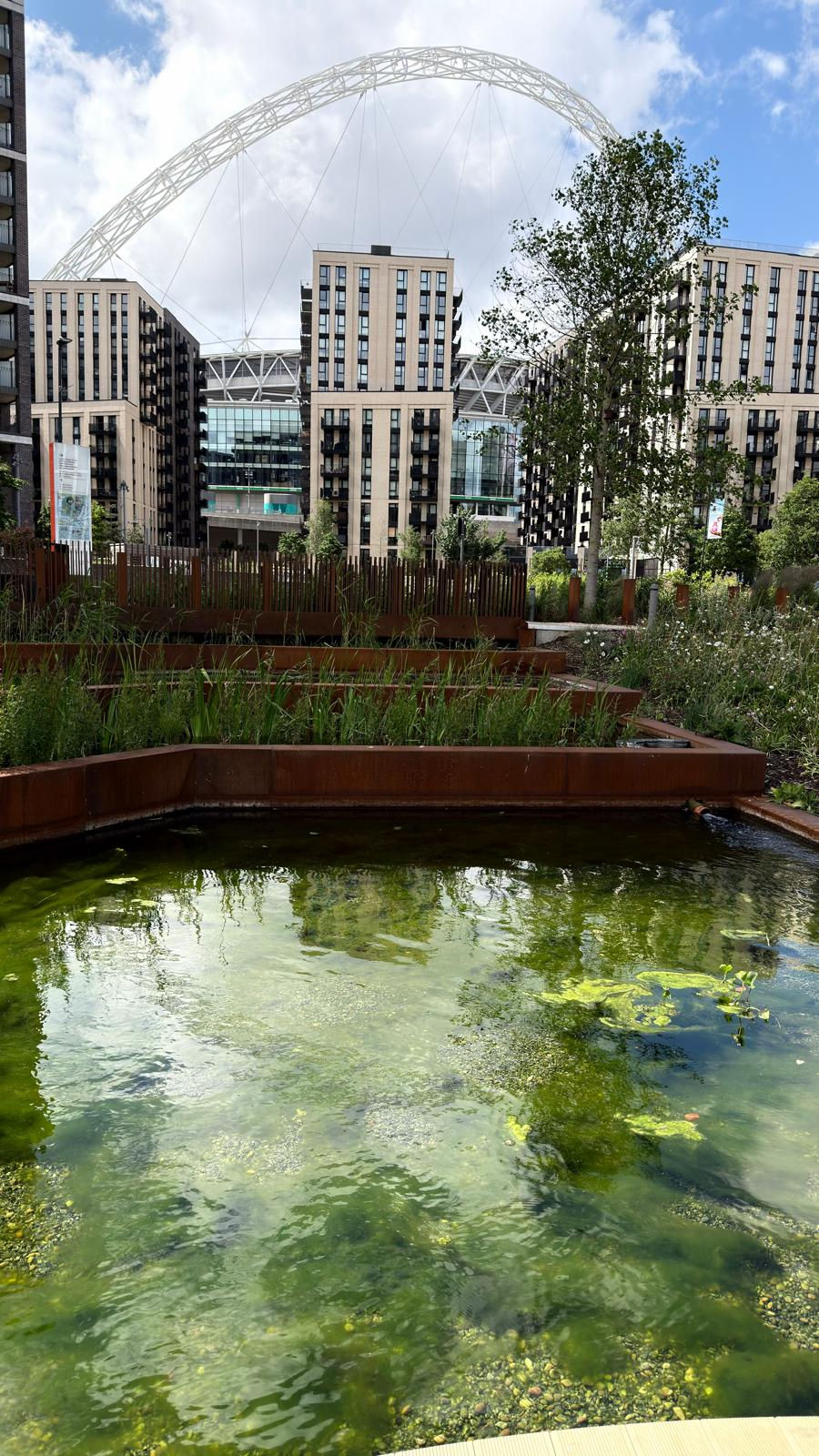
The 15-minute city can make us healthier.
Research across seven European cities suggests that better access to local amenities, green spaces and cycle routes can positively influence health, wellbeing and social connection. It highlights the important role our built environment plays in shaping healthier communities and the need to turn this evidence into meaningful action.

One of the research posters that caught our attention at the Healthy City Design Congress in Manchester explored the relationship between the 15-minute city and health across seven European cities.
Using data from 3,161 adults, the research examined access to a diversity of local destinations, green space and cycleways within a 15-minute walking catchment.
The findings are particularly interesting for those of us thinking about how the built environment influences health and wellbeing.
The researchers found that a higher 15-minute city index was associated with better perceived health, emotional wellbeing, vitality and social contact, as well as lower loneliness and perceived stress, with walking and cycling identified as important pathways.
The research also considered inequalities. A higher 15-minute city index was associated with smaller disparities in social contact across different income groups, according to the poster.
For us, this reinforces an important principle behind Saluura: health is not simply something that happens within the healthcare system. The characteristics of the places in which we live our everyday lives can support, or inhibit, healthier behaviours and wellbeing.
But understanding those relationships is only the beginning.
How do we translate the growing evidence around place and health into better decisions about development and investment?
That is one of the challenges Saluura is designed to address: looking systematically at the factors within buildings, developments and their surrounding neighbourhoods that can influence wellbeing, identifying strengths and gaps, and helping turn that evidence into priorities for action.
Because the goal isn't simply to measure wellness places. It is to create them.